

Product Name:Poly(3,4-ethylenedioxythiophene)-poly(styrenesulfonate)
Purity:99%
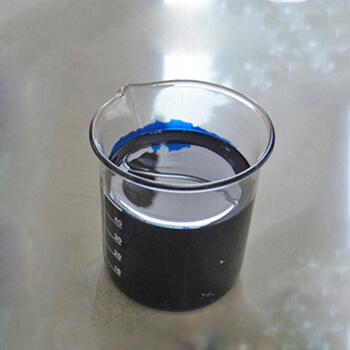
Appearance:Blue-black liquid
Sample:Available
Storage:20-25°C
Product Name:Poly(3,4-ethylenedioxythiophene)-poly(styrenesulfonate)
Purity:99%
Appearance:Blue-black liquid
Sample:Available
Storage:20-25°C
Chemical Name:Poly(3,4-ethylenedioxythiophene)-poly(styrenesulfonate)
Cas No:155090-83-8
EINECS No:629-200-1
Synonyms:PEDOT:PSS
Molecular Formula:(C8H8O3S)x?x(C6H6O2S)x
Molecular Structure:

| Item | Specification |
| Melting Point | >300 °C |
| Density | 1.011 g/cm3 |
| Refractive index | n20/D 1.344 |
| Fp | 100 °C |
| PH | 5-7 |
| Viscosity | 10–100 mPa·s |
| Solids Content | 1.0%–1.5% |
It is commonly used as a starting material for organic luminescent substances, and is widely employed in the synthesis of OLED material molecules and photochemical devices.
OLED / Organic Electroluminescence: Used as a Hole Injection Layer (HIL) to enhance hole transport efficiency, reduce driving voltage, and extend device lifetime.
Organic / Perovskite Solar Cells: Serves as a Hole Transport Layer (HTL) or transparent anode, partially replacing ITO and enabling compatibility with flexible substrates.
Organic Thin-Film Transistors (OTFT): Utilized for gate dielectric modification or as source/drain electrodes to enhance device flexibility and stability.
Transparent Electrodes (ITO Alternatives): Applied in touchscreens, flexible LCDs, electronic paper, and electroluminescent devices; features solution-processability and lower production costs.
Anti-Static Coatings: Applied to plastics, glass, photographic films, and packaging materials to dissipate static electricity and prevent dust accumulation.
Electromagnetic Shielding (EMI): Thin, lightweight conductive films used in electronic device enclosures and flexible circuit boards to suppress electromagnetic interference.
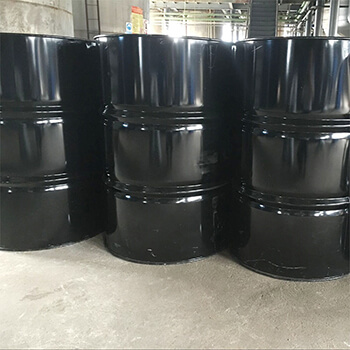
200KG/DRUM
According to customer requirements.